

The Power of Logistics to Move the World!
It's the Power of extrans.
What Is Empty Container Repositioning? The Hidden Cost & Puzzle of Global Shipping
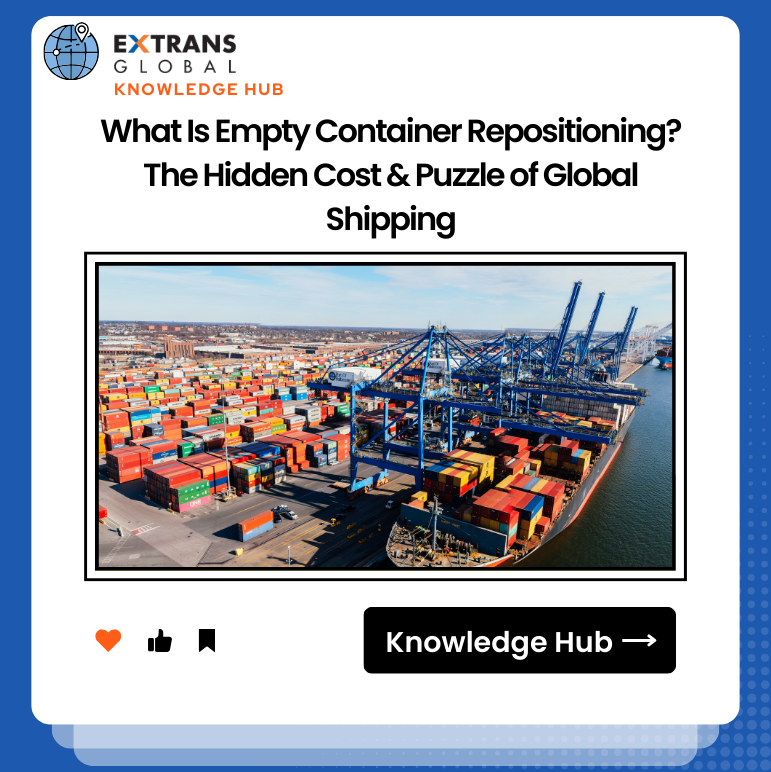
Empty container repositioning is the planned movement of empty shipping containers from locations with surplus stock to regions facing shortages, to balance global container supply and demand. It’s one of the least visible but most expensive operational tasks for shipping lines—and directly impacts freight costs for every importer and exporter.
Why Empty Container Imbalances Happen
Global trade flows are one-way unequal, creating permanent surplus/shortage zones:
- Trade deficit regions (surplus empty containers)
Import-heavy areas: North America, Western Europe. Full containers unload locally, leaving massive numbers of empty boxes with no export cargo to fill them.
- Trade surplus regions (empty container shortages)
Export-heavy manufacturing hubs: China, Southeast Asia, India. Exporters need boxes to load goods, but local empty supply runs out quickly.
Without repositioning, exporters can’t get containers to ship products, and importers’ empty boxes pile up and incur terminal storage fees.
Core Empty Repositioning Methods
Shipping lines use 4 standard strategies to fix imbalances:
- Sea repositioning (main method)
Sail empty containers on vessels from surplus ports (e.g., Los Angeles, Hamburg) directly to shortage ports (e.g., Shanghai, Singapore). Carries high fuel and port costs but is reliable for large volumes.
- Inland repositioning
Truck/rail empty boxes between nearby ports or inland hubs (e.g., move empties from inland US warehouses to Los Angeles port for export).
- Container leasing & swapping
Use third-party leasing companies to source local empties instead of moving them long-distance; or arrange container swaps between carriers in the same region.
- Temporary storage & container depots
Store excess empties in dedicated off-port depots to reduce terminal fees, waiting for demand to rebound or export cargo to appear.
The Financial Impact (Why It Matters for Shippers)
- Drives up base freight rates
Shipping lines pass repositioning costs (fuel, labor, port dues) to customers—empty moves account for 15–20% of total ocean freight costs industry-wide.
- Peak season container shortages
Poor repositioning leads to box shortages during export peaks (e.g., Chinese New Year, holiday shipping), causing delays and premium surcharges.
- Empty storage penalties
If importers hold empty containers too long before returning, lines charge fees to offset repositioning and storage expenses.
Industry Efforts to Reduce Repositioning Waste
- Backhaul cargo matching
Find low-rate export cargo in surplus regions to fill “empty” sailings (e.g., load agricultural goods from the US to Asia in boxes destined for repositioning).
- Digital container platforms
Use AI and real-time data to predict demand imbalances and optimize repositioning routes in advance.
- Container pooling
Multiple carriers share a common container fleet, eliminating individual repositioning for each line.
- Lightweight & foldable containers
Foldable empty containers cut space/weight for transport, reducing repositioning costs by up to 50%.
Empty Repositioning vs. Demurrage/Detention
| Aspect | Empty Repositioning | Demurrage & Detention |
| Responsible party | Shipping lines | Shipper/Consignee |
| Purpose | Balance global container supply | Penalize late container return |
| Cost origin | Carrier operational costs | Passed to shipper as fees |
| Timing | Ongoing supply chain planning | Post-delivery container use |
Key Takeaway
Empty container repositioning is the invisible balancing act of ocean shipping. Every time you book a container, its cost includes the expense of moving that box to you empty—and later repositioning it empty to the next export hub. Optimizing this process lowers global freight rates and reduces supply chain bottlenecks for all traders.
Share this article :


top