
- Company
-
Specialized Products
Specialized Freight Solutions
Multimodal Freight Solutions
GSA, CSA & SC
E-Commerce
- Service
- Blog
- Cargo Tracking
- Contact Us
- Site Map

The Power of Logistics to Move the World!
It's the Power of extrans.
Exploring Air Cargo Operations and Airport Logistics
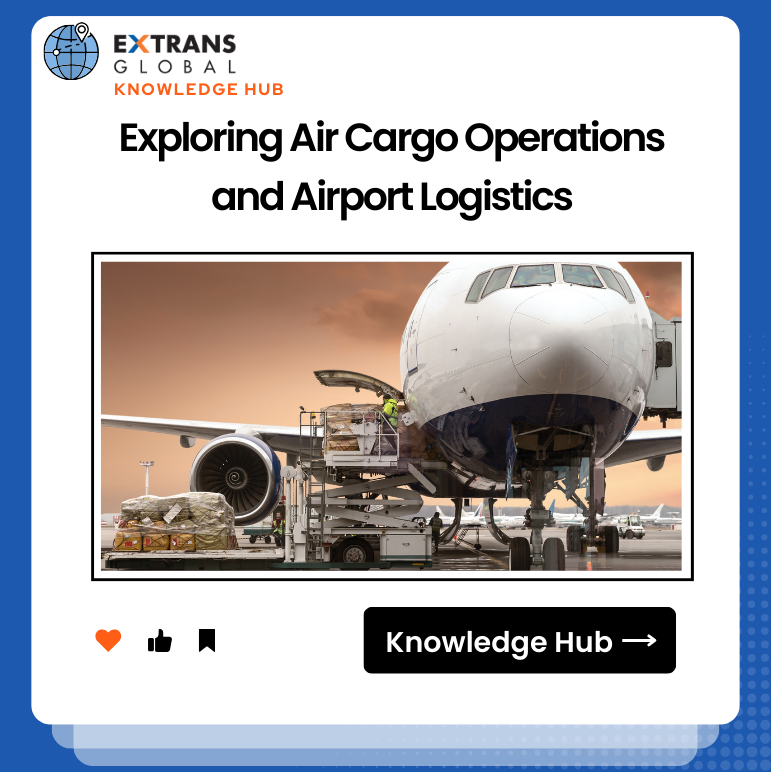
Air cargo is a crucial player in global trade, seamlessly connecting markets and ensuring the swift movement of goods. This complex process involves a combination of passenger and cargo planes, each with its own role in transportation. In this guide, we'll dive into the mechanics of air cargo operations, looking at how passenger and cargo planes work together, the different cargo loads they carry, and the essential documentation processes. Additionally, we'll explore how airport operations tie everything together in the broader supply chain.
- Passenger Planes and Belly Cargo:
Passenger planes, designed primarily for people, also contribute to cargo operations by utilizing belly cargo space. Airlines strike a balance between passenger luggage and cargo, making the most of the available space in the lower compartments. This cooperation allows for the efficient transport of lighter shipments, creating a cost-effective approach that maximizes space.
- Dedicated Cargo Planes:
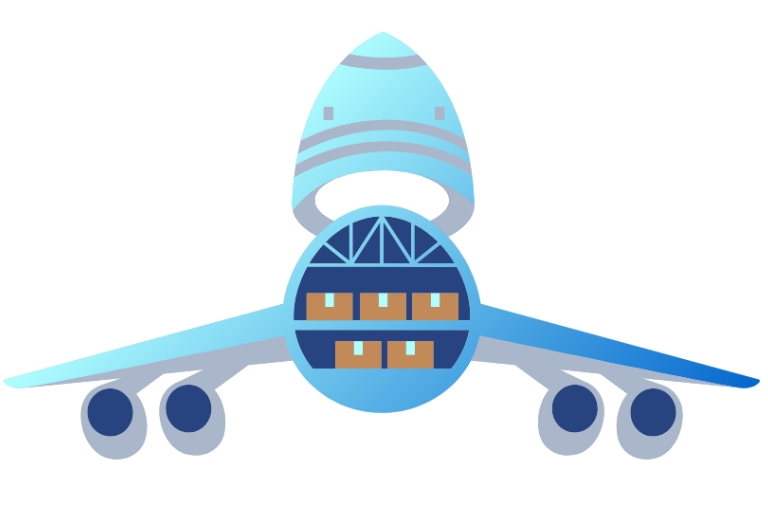
Dedicated cargo planes, purpose-built for freight transport, are the backbone of the air cargo industry. These planes have spacious cargo holds that can accommodate a variety of goods, from perishables to industrial equipment. The different sizes of cargo planes cater to the specific needs of various industries, providing tailored solutions for transporting goods efficiently.
- Types of Cargo Loads:
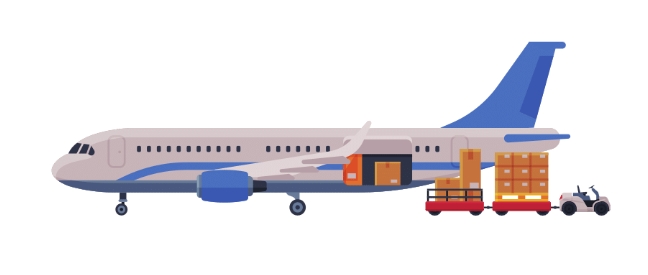
a. Unit Load Devices (ULDs): Unit Load Devices, such as standardized containers and pallets, play a crucial role in streamlining loading and unloading processes. These devices, designed to fit the cargo holds of both passenger and cargo planes, enhance efficiency and reduce the risk of damage to goods.
b. Bulk Cargo: Bulk cargo involves loading loose goods directly into the aircraft's hold. This is common for items like grains, liquids, or oversized machinery. Ensuring the efficient loading and securing of bulk cargo is critical to prevent damage during transit.

- Documentation Processes:
a. Air Waybill (AWB): The Air Waybill is a foundational document in air cargo transportation, serving as a contract between the shipper and the airline. This document includes essential details like the type of goods, quantity, destination, and tracking information.
b. Customs Documentation: Compliance with international customs regulations is vital for air cargo shipments. Customs documentation, including commercial invoices, packing lists, and certificates of origin, facilitates smooth customs clearance at departure and arrival airports.
c. Security Documentation: In an era of heightened security measures, cargo shipments require meticulous documentation to comply with security protocols. This includes information about the shipper, consignee, and a detailed description of the cargo.

-
Airport Operations and Supply Chain Integration:
Airports serve as the central hubs where all these elements come together. Ground handling crews, armed with technology, coordinate the loading and unloading of cargo planes. Warehouses strategically positioned at airports facilitate the swift movement and storage of goods.
Supply chain integration is the key to success. Airports seamlessly link with ground transportation, distribution centers, and end consumers, showcasing the industry's adaptability and ensuring goods flow smoothly through every stage.
Air cargo operations, combined with airport logistics, are the unsung heroes that keep the wheels of global commerce turning. From the loading of ULDs to the handling of bulk cargo, every step contributes to the efficient movement of goods. In the vast expanse of the skies, air cargo operations and airport logistics work together to create a reliable and precise system that fuels the global supply chain.
Share this article :


top