

The Power of Logistics to Move the World!
It's the Power of extrans.
Inland Haulage: Hidden Costs & Arrangement Tips for Exporters
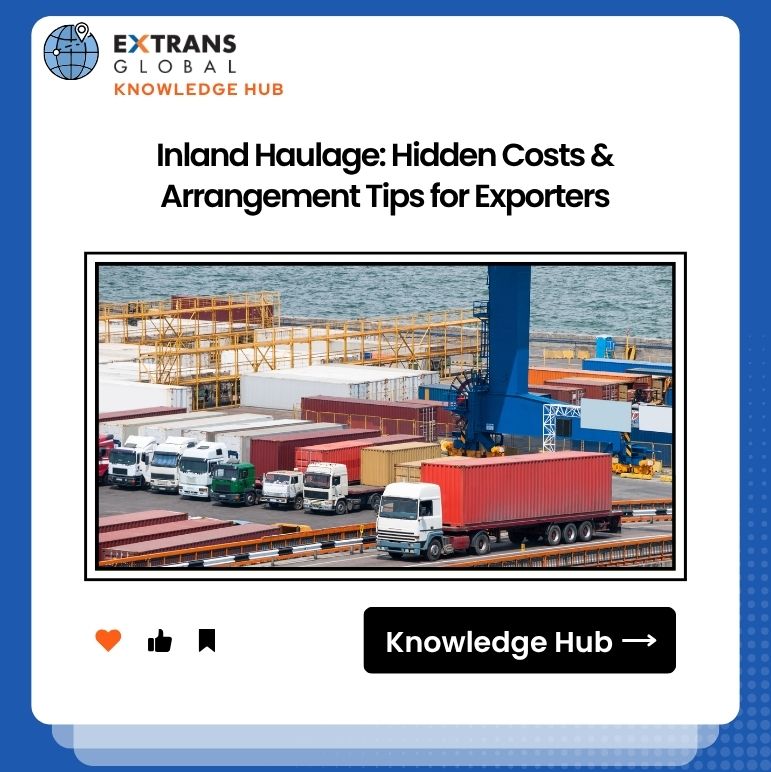
Inland Haulage Explained: Stop Wasting Money on Domestic Trucking Before Shipment
Lots of exporters only compare ocean freight prices when booking shipping space, ignoring inland trucking fees from factory to seaport. Improper truck scheduling often causes cargo missing vessel cutoff, incurs port demurrage or empty truck waiting charges, which greatly raises overall logistics expenditure. Mastering inland haulage rules helps you control the total shipping cost easily.
What is Inland Haulage?
Inland haulage refers to ground transportation by truck between your factory/warehouse and seaport container yard, airport terminal or inland depot. It covers two scenarios:
- Export haulage: Transport finished goods from factory to port for container loading.
- Import haulage: Deliver full containers from port back to the buyer’s warehouse after customs clearance.
Main Composition of Inland Haulage Charges
- Basic truck fare: Calculated by mileage, container type (20GP / 40HQ)
- Waiting fee: Generated if loading goods takes too long at the factory
- weekend / overtime surcharge for truck drivers
- toll fees, highway charges and fuel adjustment fees
- empty running cost (truck travels empty to pick up containers)
Four Common Mistakes That Cause Extra Expenses
- Book trucks too late, cargo arrives at port past cutoff time and misses the ship
- Keep trucks waiting for hours during loading without prior notice, resulting in overtime waiting charges
- Randomly change loading date, leading to empty truck dispatch loss charged by trucking companies
- Ignore weight limits for highways, causing overweight fines during road transportation
How to Arrange Inland Trucking Efficiently
- Confirm factory loading date and vessel cutoff time first, arrange trucks to arrive at the factory 2–3 hours in advance.
- Prepare all cargo, pallets and loading tools beforehand to shorten loading time and avoid waiting fees.
- Measure gross weight accurately in advance to prevent overweight penalties on highways.
- Avoid rescheduling trucks frequently; if adjustment is inevitable, notify the trucking provider one day early.
- Choose regular cooperative trucking vendors for stable prices and timeliness, instead of picking the cheapest truck every time.
Typical Troubles Brought by Poor Haulage Arrangement
- Cargo misses sailing schedule, postponing delivery to overseas buyers
- Extra waiting fees, overweight fines increase logistics cost
- Containers arrive at port ahead of schedule and pile up, producing storage fees inside the terminal
- Traffic delays on highways lead to rushed stuffing and irregular container loading
Final Takeaway
Ocean freight always attracts the most attention from exporters, yet inland trucking is where most unexpected additional costs occur. Reasonable scheduling and standardized loading preparation can eliminate most hidden haulage expenses and ensure cargo arrives at the port on schedule for loading.
Share this article :


top