

The Power of Logistics to Move the World!
It's the Power of extrans.
What Is Cross-Stuffing
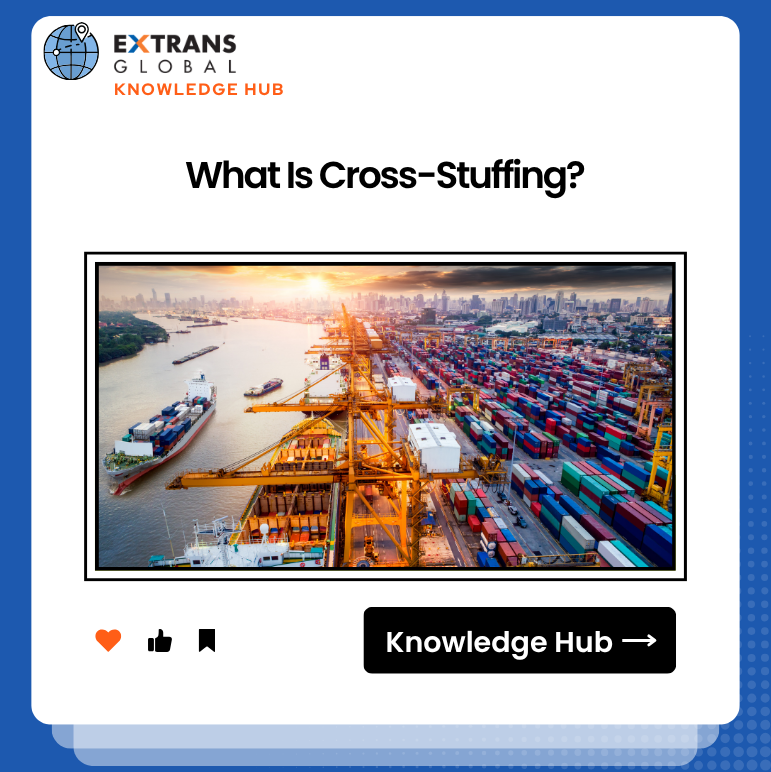
What Is Cross-Stuffing
Definition
Cross-stuffing refers to transferring cargo directly from one container to another container inside port yards or warehouses, without temporary storage in the open warehouse area. It is mostly used for transshipment cargo, split shipments or container replacement demands.
Common Application Scenarios
- Transshipment goods need to switch containers to match the next connecting vessel’s stowage rules
- Original container is damaged, leaking or polluted and must be replaced before loading
- One full container’s goods need to be split into two smaller containers for different destinations
- Consolidate scattered small containers into one complete container to save freight cost
Operation Process
- Customs and carrier approve the cross-stuffing application in advance
- Two containers are parked side by side in the designated operation zone
- Staff unload goods from the source container and directly load them into the target container
- Complete inspection, reseal, record new seal numbers and update cargo manifest data
Main Drawbacks & Hidden Risks
- Extra cross-stuffing labor and handling fees increase logistics cost
- Multiple handling greatly raises the risk of package breakage, loss or mixing of goods
- Longer waiting time at port, easy to miss the cut-off of connecting ship
- Data of container number, seal number must be revised, triggering document amendment fees
- Dangerous goods are mostly prohibited from cross-stuffing due to safety hazards
Why It Is Easy to Neglect
- Shippers do not learn about transshipment operation rules in advance
- Ignore the extra cost and time loss brought by container switching
- Fail to mark special cargo restrictions, leading to failed cross-stuffing application
- Think cargo can be freely switched between containers without official approval
Practical Preventive Tips
- Confirm if direct transshipment without cross-stuffing is available when booking
- Avoid booking incompatible container types that require mid-way replacement
- Use reinforced outer packaging if cross-stuffing cannot be avoided
- Request photos of whole transfer process for cargo damage evidence
- Confirm all revised manifest and B/L data after cross-stuffing finishes
Key Takeaway
Cross-stuffing is an emergency transfer method in port logistics instead of a standard process. It will generate additional charges and cargo risks. Try to arrange matched containers and direct transshipment to avoid cross-stuffing whenever possible.
Share this article :


top