

The Power of Logistics to Move the World!
It's the Power of extrans.
EXTRANS GLOBAL - Air Freight News - Week 20 2026
Air Cargo Market Weekly Report
1. Structural Inflection Point in Air Cargo Market — K-shaped Growth Becomes Inevitable
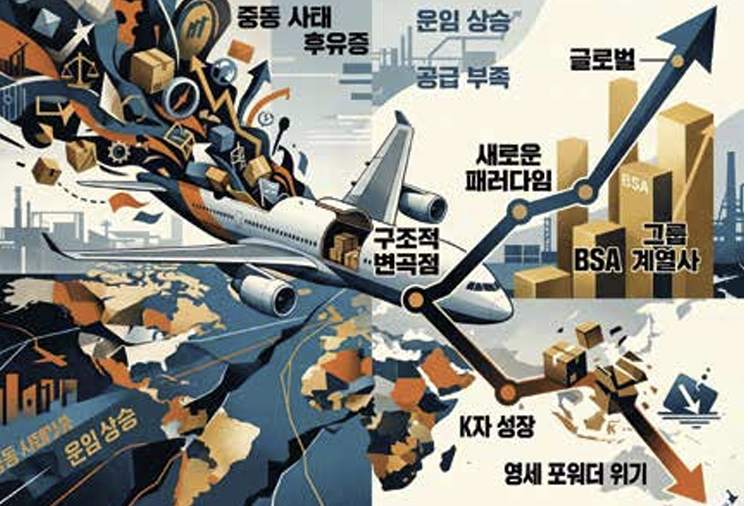
Escalating geopolitical conflicts in the Middle East have dragged on longer than expected, dealing a heavy blow to global logistics and transportation sectors. While truce talks are ongoing, there remains no clear guarantee of a final peace deal, fading market optimism over supply chain recovery.
Nevertheless, global economic and trade players have grown accustomed to the current situation, moving past early-stage panic and focusing instead on post-conflict market restructuring and countermeasures. The global air cargo industry is poised to hit a structural turning point after the war ends, ushering in irreversible profound industrial changes.
In terms of cargo demand, e-commerce shipments have declined amid U.S. sanctions, whereas demand for semiconductors, high-end precision equipment and large-scale data center machinery originating from South Korea is rising steadily. Such high-value cargo is exclusively handled by a handful of major logistics firms, mostly via dedicated full charter flights, leaving small and medium-sized forwarders with no access to these resources.
Official statistics show overall cargo volumes remain stable, yet actual viable business orders available to most market players have shrunk sharply. The industry is trapped in a tough predicament of scarce real demand coupled with skyrocketing freight rates and operating costs, further widening the divide within the forwarding industry.
Small and medium-sized forwarders are facing dual pressures. In particular, South Korean export air cargo forwarders struggle to afford surging spot rates and fail to secure stable airline space, making capacity procurement nearly impossible. They are forced to source space from BSA contractors, consolidated cargo specialists and block charter operators at prevailing market prices.
In addition, shippers tend to concentrate shipments on reputable large logistics providers for risk control, further squeezing the living space of minor players. Many clients with small-batch shipments choose to suspend deliveries and wait for better market conditions. Lacking economies of scale, mid and small-sized forwarders are structurally vulnerable to being phased out of the market.
The post-war landscape will reshape the entire air cargo industry completely. The market will see typical K-shaped differentiation: leading global mega-forwarders will dominate core resources and lucrative routes on the upper track, while unadaptable small enterprises will slide down the lower track.
In the new era, mere price competition and relationship-based sales can no longer sustain business survival. To stay competitive, smaller forwarders must build core expertise in specific trade lanes or commodity sectors, or explore niche markets by delivering differentiated value-added services to clients.
2. Seize Post-war Market Opportunities — Forwarders Step Up Full-scale Capacity Procurement
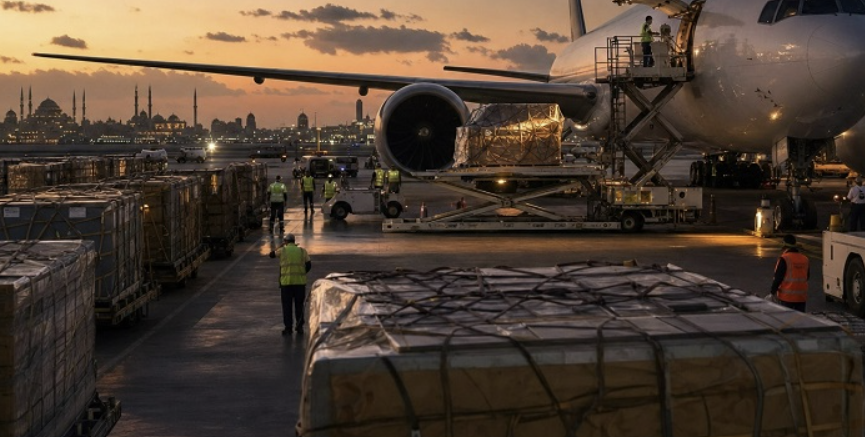
Looking ahead to the eventual end of Middle East tensions, forwarders are proactively securing sufficient air cargo space to brace for looming long-term capacity shortages.
A slowdown in rate hikes does not mean the capacity crunch has been resolved. On the contrary, once the conflict ends and global trade volumes rebound fully, existing structural capacity constraints will become even more severe.
Even after peace is restored, Middle Eastern hub carriers are unlikely to restore pre-war flight capacity in the short term. Industry insiders point out that the retreat of Middle Eastern airline capacity has already pushed Asia-Europe air cargo rates to elevated levels, and the market is fully aware that their operational recovery will be a slow process.
On China-US routes, robust demand driven by AI server shipments, cross-border e-commerce goods and massive sea-to-air cargo diversion is continuously tightening available space. Forwarders believe such demand shifts are not temporary and will gain stronger momentum once supply chains stabilize after the war. Even the European market, which once faced the toughest conditions, is gradually stabilizing, yet capacity tightness is expected to persist until the end of the year.
The industry has long predicted persistent capacity shortages and prolonged transit lead times across the Asia-Pacific region, a trend set to accelerate following the conclusion of Middle East conflicts.
3. EU Officially Approves Fixed €3 Levy Per Low-value Import Shipment — Turmoil Looms for E-commerce & Air Cargo Sectors
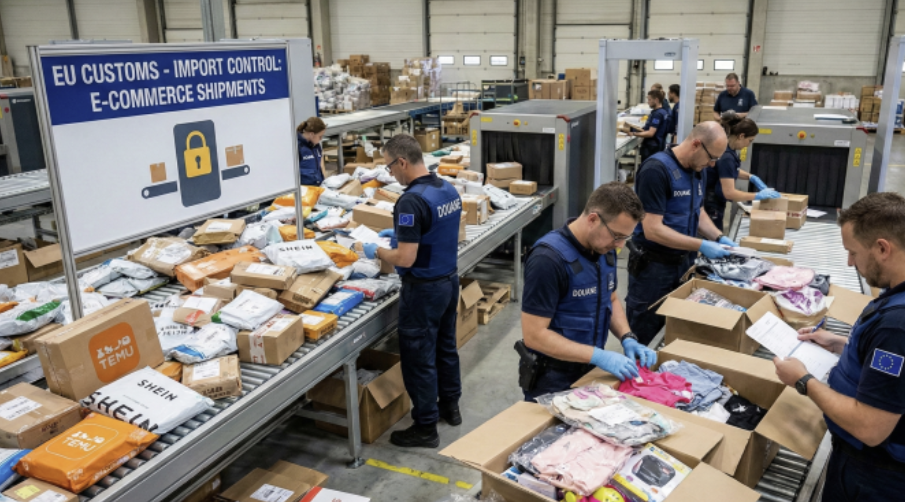
The European Union has officially issued Delegated Act (C(2026)2760), laying down core detailed rules for its customs reform initiative, which is set to bring profound impacts on global cross-border e-commerce and air cargo industries.
The new rules comprehensively overhaul the clearance mechanism for low-value imported goods, greatly increasing operational burdens for cross-border e-commerce platforms, freight forwarders, airlines and postal service providers.
The most influential regulation confirmed is the uniform fixed levy of €3 per individual shipment, applicable regardless of original tariff rates based on HS commodity codes.
Widespread operational confusion is anticipated during practical implementation. Traditional international postal systems relying on CN22 and CN23 declaration forms cannot fully adapt to new commodity identification requirements. Moreover, relevant declaration information must be filled in supporting documents instead of independent data fields, further raising operational complexity.
This policy will directly hit routes with high proportions of ultra-low-cost e-commerce parcels. In recent years, surging shipments from Chinese platforms including Temu and Shein have strongly boosted air freight rates and passenger bellyhold demand. Moving forward, higher clearance costs and complicated declaration procedures are likely to trigger a drop in such cargo volumes.
4. Four Korean LCCs Forecast Combined Loss of KRW 244.7 Billion in Q2 Despite Temporary Q1 Profitability
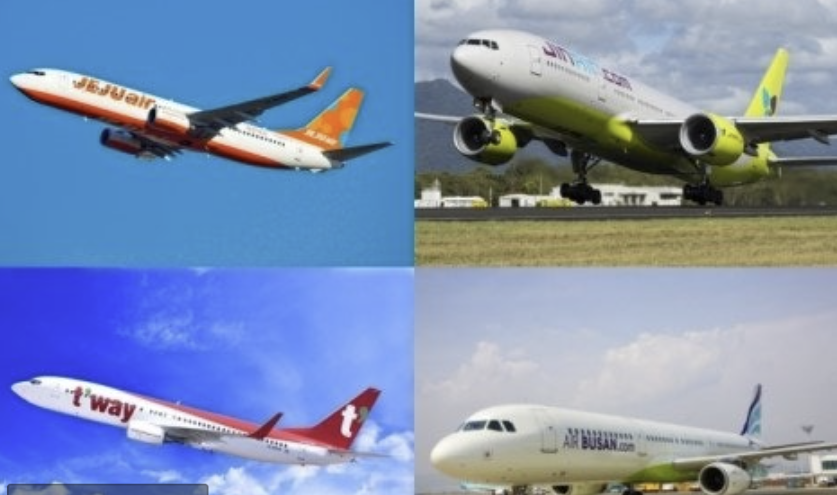
South Korean low-cost carriers (LCCs) achieved a temporary profit rebound in Q1 thanks to recovering travel demand. However, driven by sustained high jet fuel costs stemming from prolonged Middle East conflicts, the whole sector is expected to slip into collective losses in Q2. Restricted by their short-haul focused business model with limited room for fare hikes, LCCs will face an even sharper profitability decline.
Four listed major local LCCs namely Jeju Air, Jin Air, T’way Air and Air Busan are projected to record a combined operating loss of KRW 244.7 billion in the second quarter.
Short-haul outbound travel to China and Japan lifted quarterly performances temporarily, yet surging fuel expenses will push the entire industry into deficit territory starting from Q2.
- Jeju Air: Estimated Q1 revenue hits KRW 516 billion with operating profit of KRW 49.7 billion; Q2 revenue is expected to rise 20.24% to KRW 399.7 billion, but operating profit will drop KRW 51.7 billion year-on-year, turning into losses.
- T’way Air: Witnesses the most severe profit erosion amid revenue growth. Its Q1 revenue rises 10.16% YoY to KRW 492 billion, and Q2 revenue increases 18.56% to KRW 448 billion; nevertheless, it is forecast to post a huge operating loss of KRW 132 billion in Q2, mainly dragged by rising costs from newly expanded long-haul routes.
- Jin Air: Also expected to fall into red in Q2; its Q1 revenue edges up 0.52% YoY to KRW 415.7 billion while operating profit dives 26.78% to KRW 42.7 billion.
Unlike full-service carriers (FSCs), LCCs have limited ability to pass rising costs onto ticket prices. Coupled with fierce competition in short-haul markets, their overall business performance is facing unprecedented pressure.
Share this article :


top