

The Power of Logistics to Move the World!
It's the Power of extrans.
EXTRANS GLOBAL - Air Freight News - Week 08 2026
Air Cargo Market Highlights
1) Korean Air & Delta Push for Incheon–Austin Direct Route Ahead of Samsung’s US Chip Plant Launch
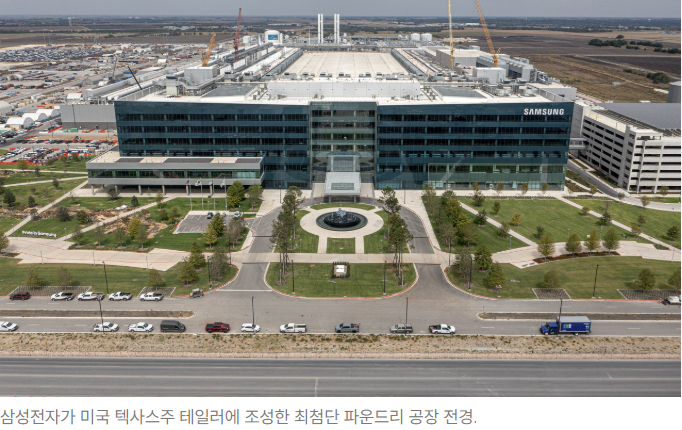
A direct flight between Incheon International Airport and Austin, Texas—home to a Samsung Electronics chip plant—is being pursued.
Ahead of the full operation of Samsung’s new foundry plant in Taylor, near Austin, in the second half of this year, the aviation industry is discussing launching an Incheon–Austin route to support smooth personnel movement and business decisions. Korean Air and Delta Air Lines held a meeting with officials from both companies in Austin on the 11th to discuss launching the route.
Currently, there are no direct flights from Korea to Austin, requiring connections via Dallas or Los Angeles international airports, with a total travel time of more than 18 hours.
Back in 2022, Korean Air pushed for an Incheon–Austin route following Samsung’s local investment announcement, but the launch never materialized.
However, discussions have gained new momentum as Samsung’s existing Austin chip plant has rebounded—winning orders for Apple iPhone image sensors—and the Taylor plant nears operation.
Samsung has invested $37 billion since 2022 in a state-of-the-art foundry in Taylor, 25 km north of Austin. Equipment installation has recently begun, with final preparations underway for full operation four years after groundbreaking.
While the Austin plant focuses on mature-process production, the new Taylor plant will use cutting-edge 2-nanometer process technology, serving as a forward base for major US fabless customers including NVIDIA, Tesla, Apple, Qualcomm, and AMD.
2) Asiana Airlines to Expand China Routes by 20% for Summer Schedule
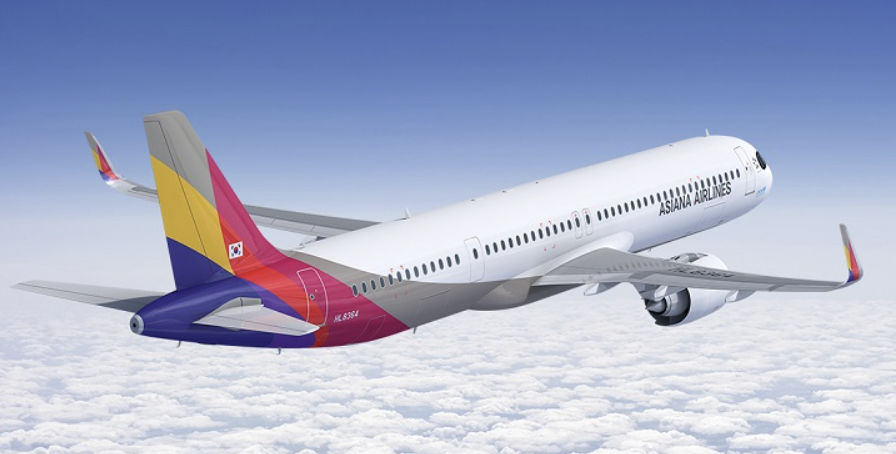
Asiana Airlines is drastically increasing flights on China routes for the summer season in line with recovering air travel demand between Korea and China.
Starting March 29, the carrier will boost China capacity by approximately 20% compared to the winter schedule, operating 161 weekly flights on 18 routes.
Asiana will resume daily flights on Incheon–Chengdu and Incheon–Chongqing routes starting March 29, which were suspended during the winter season.
Both routes will be operated with 188-seat A321neo aircraft. The Incheon–Chengdu flight departs Incheon at 8:00 PM and arrives locally at 11:00 PM, with the return flight departing after midnight and arriving in Incheon in the early morning.
Major existing China routes will also increase frequencies:
- Incheon–Beijing: from 17 to 20 weekly flights
- Incheon–Dalian: adding afternoon flights to daily morning service, reaching 10 weekly flights
- Incheon–Tianjin: from 3 to 7 weekly flights
- Incheon–Nanjing: from 6 to 7 weekly flights
Further increases are planned starting in May:
- Incheon–Changchun: 9 weekly flights
- Incheon–Yanji: 8 weekly flights
3) T’way Air Cancels Multiple Asian Routes in First Half to Fight Losses
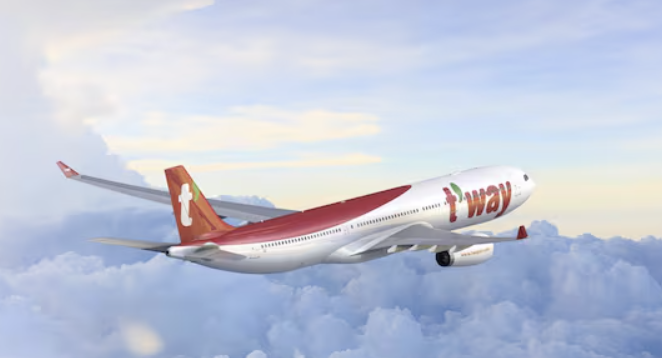
T’way Air has decided to cancel a large number of flights originally scheduled for the first half of this year, including routes to China, Laos, and Bangkok.
Industry analysts view this as a bold decision to escape ongoing losses, despite the burdens of flight cancellations such as damaged customer confidence.
Affected routes include:
- Incheon–Vientiane: partial cancellations March 16–27
- Incheon–Kota Kinabalu: March 3–28
- Incheon–Tashkent: partial cancellations March 6–27
- Incheon–Shenyang: partial cancellations March 2–April 26
- Cheongju–Bali: March 3–July 15
- Daegu–Bangkok: March 26–July 15
The scale of cancellations is considered unusual in the industry. While carriers sometimes cancel flights due to aircraft issues or sudden demand drops, T’way’s scope is exceptionally large.
Industry sources say the decision was inevitable for T’way Air to improve profitability amid consecutive losses.
Airlines with traffic rights are required to operate at least 80% of allocated slots in winter and summer schedules to retain rights.
Even if the 80% minimum is met, cancellations risk disadvantages in future Ministry of Land, Infrastructure and Transport (MOLIT) traffic rights allocations and damage to customer trust.
T’way Air’s consensus Q4 2025 estimated performance:
- Consolidated revenue: KRW 469.7 billion
- Operating loss: KRW 31.9 billion
Revenue rose 19.5% year-on-year, but losses widened by 47.6%.
Professor Lee Hwi-young of Aviation Management at Inha Technical College said:
“Deciding to cancel flights on a scale rarely seen at large carriers shows instability in survival. Especially since T’way Air took on European routes, cost pressures have grown, making fleet efficiency critical.”
4) EL AL Israel Airlines Announces Asia Expansion Including Korea
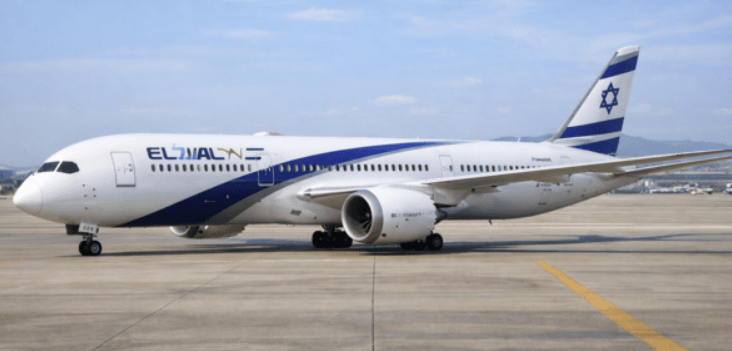
EL AL Israel Airlines, Israel’s flag carrier, has unveiled plans to expand routes in Asia, including South Korea.
The carrier will add 9 new Asian routes—including Hanoi (Vietnam), Seoul (Korea), and Manila (Philippines)—bringing total direct destinations to/from Israel to around 60. It plans to operate approximately 900 weekly flights worldwide by expanding major routes and increasing frequencies on popular lines.
EL AL will deploy Boeing 787 Dreamliners on long-haul routes to Vietnam, Korea, the Philippines, and others, operating 3 weekly direct flights.
Six European routes including Copenhagen, Sardinia, and Sicily will be launched by its subsidiary Sun d’Or at competitive prices.
The airline also revealed ticket sales plans for some long-haul routes:
- Hanoi: round-trip fares from $899, sales starting October 2026 for flights launching in 2026
- Seoul/Incheon: sales starting May 2026, with flights scheduled to launch in March 2027
Current traffic rights between Israel and South Korea allow 3 weekly flights for each country.
With EL AL’s planned launch, Korean carriers such as Korean Air—which previously served Israel—may also resume operations.
Share this article :


top