

The Power of Logistics to Move the World!
It's the Power of extrans.
EXTRANS GLOBAL - Air Freight News - Week 07 2026
Key Air Cargo Market Overview
1) 2026 Air Cargo Market – Amid Low Growth, “Supply Overcapacity · Route Reconfiguration” as Core Variables
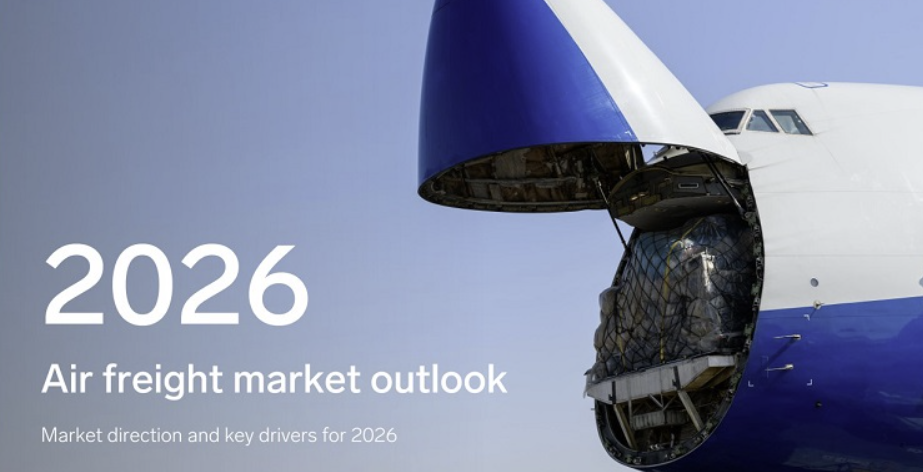
- The global air cargo market in 2026 is expected to enter a phase of structural imbalance, with demand growth slowing while supply expands simultaneously.
- Global forwarder group Rhenus, in its latest ‘Air Freight Market Outlook 2026’ report, forecasts that air cargo demand growth will remain in the low single digits, while transport capacity will exceed demand due to new freighter deliveries and increased belly capacity.
- First, global air cargo demand is projected to grow at around **3% annually** in 2026.
- On the supply side, global air cargo transport capacity is expected to expand by **6–7%** in 2026.
- With overlapping factors such as new freighter deliveries, recovery of belly capacity on passenger aircraft, and passenger-to-freighter (P2F) conversions, structural supply pressure is likely to form across the market.
- In particular, major cargo fleet expansions by Middle Eastern airlines continue, leading to strong supply growth on Asia–Europe and Asia–Middle East routes.
- The 2025 U.S. tariff policies and changes to the de minimis regime are evaluated as having significantly reconfigured global air cargo flows.
- In other words, air cargo volumes from China to the U.S. have decreased, while volumes on China–Europe and Southeast Asia–U.S. routes have increased rapidly, indicating that the ‘China+1’ strategy is now fully underway in the air cargo market as well.
- On the demand side, e-commerce remains the key driver of air cargo demand, though growth is expected to slow compared to the previous year.
- Meanwhile, high-value cargo such as semiconductors, data centers, medical/healthcare products is analyzed to maintain relatively stable growth.
This suggests that the cargo structure with high reliance on air transport will likely persist in 2026.
- In addition, with supply increases and demand slowdown coinciding, air cargo rates in 2026 are expected to enter an overall weak or stable phase.
“In an oversupply environment, even during seasonal peak periods, the rebound in rates is likely to be limited,” the analysis states.
However, geopolitical risks, U.S.–China trade conflicts, and conflict situations in the Middle East and Europe continue to be pointed out as factors for short-term rate volatility.
2) India–EU FTA Triggers ‘Supply Competition’ in the Global Logistics Market – Simultaneous Pressure on India-Origin Routes to the U.S. and Europe

- As the conclusion of a free trade agreement (FTA) between India and the European Union (EU) becomes visible, the global logistics and transportation market is rapidly entering a tense phase.
- With tariff reductions and easing of trade barriers, India’s manufacturing-based exports are expected to surge, and structural pressure—where transport capacity cannot keep up with demand—is already appearing across both sea and air sectors.
- The market views this India–EU FTA not simply as bilateral trade expansion but as a trigger accelerating global supply chain reconfiguration.
- In particular, combined with the possibility of U.S. tariff reductions on India, a dual demand structure is forming where India-origin cargo is simultaneously flowing into both European and U.S. markets—this is a key variable.
- The EU evaluates this agreement as “the largest trade deal in history,” forecasting a significant increase in inflows of Indian products to Europe across automotive parts, chemicals, textiles, consumer goods, and industrial goods.
In the initial phase after the India–EU FTA, high-value parts, samples, and time-sensitive urgent cargo are highly likely to move by air rather than finished products.
- If U.S.-bound volumes overlap as well, belly capacity shortages and expanded spot rate volatility on long-haul India-origin routes will be unavoidable.
- India has a high proportion of air cargo-friendly industries such as e-commerce, pharmaceuticals, IT/electronic components. If demand from the EU and U.S. increases simultaneously, air cargo will play a role in supplementing sea bottlenecks while facing its own supply shortage risks.
- Concerns raised in some quarters about ‘worsening Indian exports’ or ‘shrinking trade with the U.S.’ are evaluated as not accurately explaining the current situation.
The essence of this change is not a decrease in demand, but limitations in logistics execution capability due to a surge in demand.
3) CargoAi – From ‘Post-Event Confirmation’ to ‘Preemptive Prediction’ in Air Cargo Tracking (AI Predictive Tracking)

- CargoAi has launched ‘AI Predictive Tracking,’ a function that predicts air cargo delays and operational risks in advance.
This solution is provided in the form of an add-on to the CargoMART platform and CargoCONNECT Track & Trace API.
- AI Predictive Tracking is based on millions of historical shipment data and real-time airline flight information, predicting the occurrence timing of major milestones (FWB·RCS·MAN·DEP·ARR·NFD·DLV) on a probability basis (P50·P90).
Instead of the existing method of confirming after events occur, the core is to detect delay possibilities in advance and provide early warnings.
- This allows airlines to identify unaccepted cargo or undeclared dangerous goods before cutoff, while forwarders can proactively respond through document supplementation, pickup adjustments, and preemptive customer notifications.
Ground handling companies and system-integrated firms can also use predictive data to set/manage work priorities and improve efficiency.
- Meanwhile, through this function, CargoAi aims to shift air cargo operations from a post-event response focus to a preemptive prediction and response structure, supporting more stable operations in a market environment with increasing volatility.
4) Asiana Airlines Cargo Business Sale for Korean Air Integration Ultimately Becomes a ‘Performance Boomerang’

- According to a Financial Supervisory Service disclosure, Asiana Airlines recorded sales of KRW 6.1969 trillion, operating loss of KRW 342.5 billion, and net loss of KRW 136.8 billion on a standalone basis in 2025.
- Compared to 2024, sales decreased by 12.22%, while it swung to an operating loss, and the net loss decreased by 72.3%.
With the integration with Korean Air approaching by the end of this year, Korean Air is still posting solid profits, but with Asiana Airlines and its subsidiaries (LCCs) in the red, Korean Air CEO and Chairman Cho Won-tae will inevitably face deepening concerns about post-integration profitability improvement.
- As the parent company Korean Air approaches the Asiana Airlines merger in December, observations suggest that high-intensity measures will be needed to secure profitability thereafter.
- In the enterprise value enhancement plan announced by Korean Air in December last year, it analyzed that competition in the aviation market is intensifying due to domestic low-cost carriers entering long-haul routes, increased supply from Middle Eastern and Chinese airlines, etc.
- Chairman Cho Won-tae has publicly stated multiple times that there will be no artificial restructuring during the integration process of the two companies, but justifications for adjusting overlapping route schedules, returning older aircraft types, and reducing support organizations are gradually increasing.
- As of the end of 2025, the combined fleet size is Korean Air with 142 passenger aircraft and 23 freighters, Asiana Airlines with 68 passenger aircraft (13 financial leases, 14 owned, 41 operating leases). Combined passenger aircraft: 210, freighters: 23, combined employees: approximately 28,000.
5) Airlines Movement
- Silk Way West Airlines (7L) – From March, increased freighter operations to 3 times weekly on Incheon–Baku cargo route
- 7L122 (Fri): Incheon (06:30) → Baku (08:30~09:00) / B747F
- 7L124 (Sat): Incheon (05:05) → Baku (07:05~07:35) / B777F
- 7L129 (Tue): Incheon (05:05) → Baku (07:05~07:35) / B747F
Share this article :


top