

The Power of Logistics to Move the World!
It's the Power of extrans.
EXTRANS GLOBAL - Air Freight News - Week 06 2026
Key Air Cargo Market Trends
1) Air Cargo Demand Eases as Chinese New Year Approaches

Demand Softening on Long-Haul Routes from Asia-Pacific
- Demand for air cargo from Asia-Pacific is gradually easing ahead of February, with a limited rebound expected before Chinese New Year. Rates across long-haul routes to the Americas and Europe have shifted toward stable or mild downward pressure.
- According to Dimerc’s 2026 report, demand from Asia to the U.S. and Europe is slowing gently in early February, and the decline in e-commerce volumes seen since January is likely to continue into February.
E-commerce Slowdown and Spot Rate Direction for Asia–Americas/Europe
- With e-commerce volume slowdown persisting since January, air cargo demand from Asia to the U.S. and Europe has entered a gradual adjustment phase without a clear rebound. As a result, spot rates on these long-haul routes are generally stable or under gradual downward pressure.
- While Southeast Asia → North America rates rose from $2.22/kg to $2.44/kg, the overall market tone is converging toward weaker long-haul demand and softer rates as February progresses.
Relatively Firm Intra-Asia Demand and Potential Capacity Tightness
- Unlike long-haul routes, intra-Asia air cargo demand remains relatively firm year-on-year. As Chinese New Year nears, capacity is expected to tighten gradually on some regional routes.
- Although intra-Asia demand is lower than Q4 peaks, it is forecast to stay healthy compared to the previous year.
Air Freight Indicators and Regional Price Divergence
- The TAC Index showed global air freight rates fell –3.3% week-on-week in the fifth week of January, and –6.1% year-on-year, indicating limited expectations for early rate increases ahead of Chinese New Year.
- China→U.S. rates declined week-on-week, while China→Europe rates remained relatively high. Hong Kong-origin rates continued to weaken, and Shanghai-origin rates edged down week-on-week but stayed slightly higher year-on-year.
- While softening rates spread across most of Asia week-on-week, Vietnam saw an exceptional week-on-week rise in rates to the U.S. and Europe.
2) Key Logistics Trends to Watch in 2026

Growing Complexity of Air Cargo Networks
- Air cargo networks are becoming more complex due to trade policies, geopolitics, and export controls.
- Regional disruptions spill over globally, expanding supply chains toward a multi-hub structure rather than single routes.
- After extreme volatility and a recovery phase, the air cargo market is entering a broadly stable period.
- Air cargo growth in 2026 is expected to reach the mid-to-high single digits.
- Shippers prioritize flexibility, visibility, and transparency, and these demands will persist.
- Real-time forecasting and customer communication capabilities are critical for cost control and risk management.
Policy & Regulatory Uncertainty
- Strengthened regulations on non-resident commercial driver licenses are pushing some carriers out of the market.
- U.S. Supreme Court rulings on tariffs and the USMCA review schedule are increasing market uncertainty.
- Manufacturers and industrial shippers tend to delay large-scale investment decisions.
- Uncertainty acts as a greater constraint on industrial demand and volume growth than on consumer demand.
Upward Pressure on Last-Mile Delivery Costs
- Last-mile delivery fees are expected to rise further in 2026, driven by rate and surcharge increases from FedEx and UPS.
- The TD Cowen AFS Freight Index for parcel prices is forecast to climb further after hitting a peak in Q4 2025.
- The quarterly average rate is projected to be 38.9% above January 2018 levels, up +5.4% year-on-year.
- Transport costs account for a much larger share of corporate cost structures than in the past, placing particular pressure on e-commerce companies.
Overall Market Environment
- The rate environment in 2026 will generally favor shippers, but this does not guarantee smooth logistics operations.
- Capacity is sufficient across all transport modes—ocean, air, rail, and truck—yet uncertainty remains due to tariffs, surcharges, and service risks.
- Carriers will adjust prices more rapidly throughout the year, making it difficult to forecast annual cost changes based solely on early-year GRIs (General Rate Increases).
3) Taewoong Logistics Advances into E-Commerce Logistics Market

Taewoong Logistics (CEO: Han Jae-dong, Cho Yong-jun) has recently entered the e-commerce logistics market by building fulfillment centers in the Seoul Capital Area and signing contracts with luxury online platform companies.
The company is developing specialized e-commerce logistics services for fast-growing overseas categories including K-beauty, K-pop, and K-content, expanding its network to target the cross-border e-commerce (reverse direct purchase) logistics market worth approximately KRW 1 trillion annually. It plans to further expand into global e-commerce businesses linked with overseas subsidiaries by 2028.
With the online shopping market already exceeding KRW 200 trillion and continuing to grow, Taewoong Logistics will expand its e-commerce business from domestic logistics services to a global scale.
A company official stated that Taewoong will apply its expertise in freight forwarding and import/export logistics to e-commerce fulfillment, addressing diverse customer needs through its 19 subsidiaries in 17 countries worldwide.
4) Transall Obtains Regulated Agent Certification
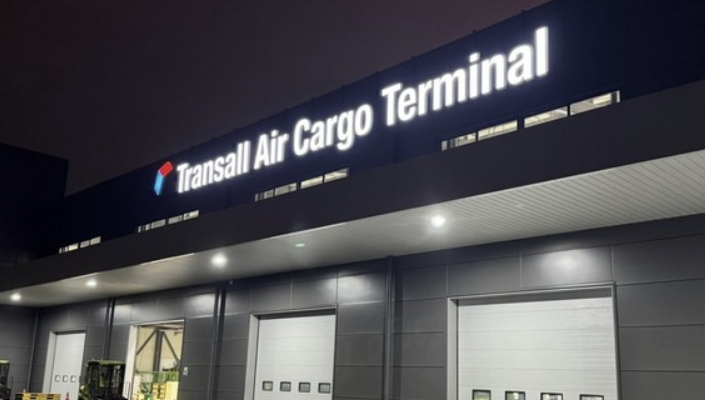
Transall (CEO: Shin Yun-sun), a specialized air cargo consolidator and subsidiary of integrated logistics provider Taewoong Logistics (Han Jae-dong, Cho Yong-jun), announced on February 2 that it has received Regulated Agent certification from the Ministry of Land, Infrastructure and Transport (MOLIT).
The newly established Regulated Agent Terminal is a logistics facility operated directly by a certified Regulated Agent. Cargo that completes security screening and Unit Load Device (ULD) build-up inside the terminal can be loaded directly onto aircraft without additional security checks at airport cargo terminals, significantly reducing airport waiting times and improving air cargo handling efficiency.
After signing a lease agreement with Incheon International Airport Corporation for the Airport Logistics Complex (Site G7) in 2024, Transall secured a new warehouse in the Incheon Free Trade Zone (FTZ) G7 site and began business expansion. It currently operates a new warehouse of approximately 1,340 pyeong (≈4,420 sqm) and a Regulated Agent Terminal space of about 800 pyeong (≈2,640 sqm) within G7, with phased facility construction and operational preparation to meet Regulated Agent requirements.
With this certification, Transall can fully operate its Regulated Agent Terminal equipped with advanced X-ray and security inspection equipment. It has also established capabilities to perform BUP (Bulk Utilization Program) for both freighter and passenger aircraft cargo, which is expected to further expand its range of airline partners and customer service capacity.
Transall has launched the dedicated brand TACT (Transall Air Cargo Terminal) for its Regulated Agent Terminal. The name matches the standard air cargo tariff reference published by IATA, recognized globally as an industry benchmark.
Share this article :


top