

The Power of Logistics to Move the World!
It's the Power of extrans.
EXTRANS GLOBAL - Air Freight News - Week 09 2026
Air Cargo Weekly Update
1) Impact of U.S. Supreme Court Blocking Trump Tariffs on Global Logistics & Transport
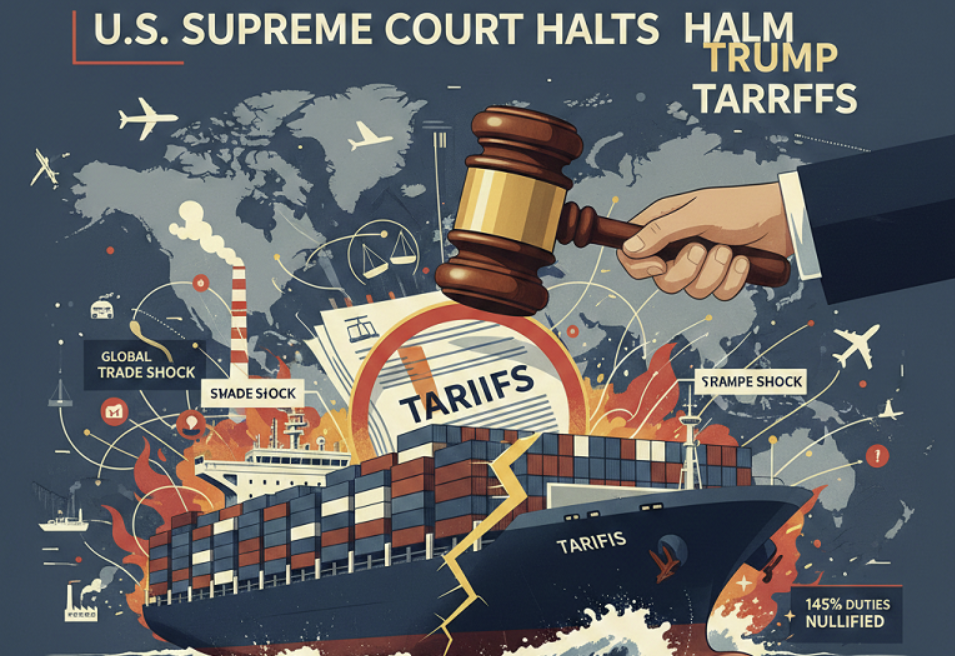
The U.S. Supreme Court has restricted the president’s authority to impose broad tariffs under emergency powers, marking a major turning point for global trade and international logistics.
This ruling goes beyond a simple legal dispute and signals structural changes across ports, airports, freight forwarders, customs brokers, and air & ocean transport networks.
The Supreme Court ruled that the International Emergency Economic Powers Act (IEEPA) does not grant the president unilateral authority to impose tariffs.
As a result, the tariff framework based on IEEPA—including the 10% universal “reciprocal tariff” applied from 2025 and cumulative tariffs of up to 145% on Chinese goods—has been deemed illegal and invalidated.
The logistics industry felt severe impacts from U.S. tariffs, especially supply chains handling Chinese manufactured and e-commerce cargo.
Faced with high duties, shippers diversified sourcing to Vietnam, India, Mexico, and other countries, leading to longer transport distances, longer lead times, and a sharp rise in multi-origin management costs.
Freight forwarders and customs brokers saw a surge in inquiries regarding commodity classification, origin verification, and bonded warehouse usage, greatly increasing workloads.
In the air cargo market, the termination of the de minimis exemption for low-value Chinese e-commerce packages was a decisive factor.
Cross-border e-commerce air cargo, which grew on high-volume, low-value parcels, contracted sharply, forcing airlines, ground handlers, express, and e-commerce logistics providers to restructure their businesses.
What legal alternatives might the Trump administration use?
Former President Donald Trump insisted that “virtually nothing will change in practice.”
He stated that national security tariffs, Section 232 tariffs, and existing Section 301 tariffs would all remain in place immediately.
He added he would sign an executive order to impose a 10% global tariff under Section 122 in addition to existing duties, and launch new Section 301 investigations to address unfair trade practices.
2) Weekly Air Market Update (by WORLD ACD)
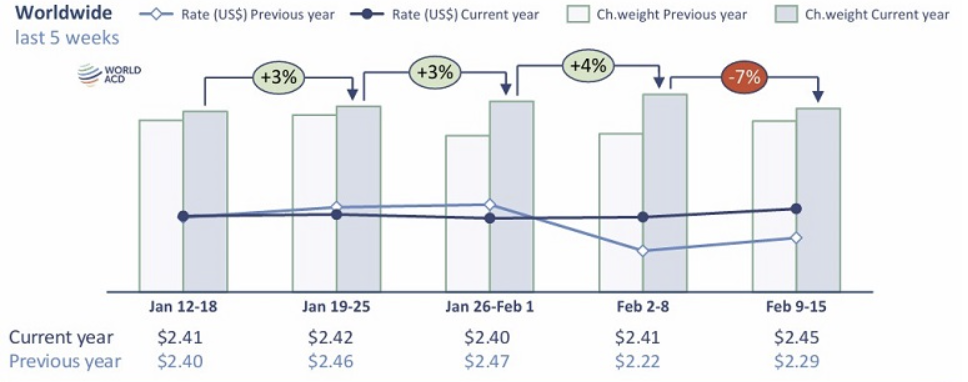
Capacity Expanding as Demand Softens
- Global capacity expanded +2% to +15% compared to the average of the past two weeks, contrasting with falling cargo volumes.
- North America rose +6% as operations recovered from winter storms; only Africa and CSA saw capacity declines.
- YoY: Global capacity +10%, Asia +18%, MESA (Middle East & South Asia) +14%.
China & Hong Kong Down; Southeast Asia Remains Strong
- Total Asia-Pacific outbound volume fell 5% WoW as pre‑Chinese New Year shipping momentum slowed.
However, Southeast Asia volumes partially offset this on Americas routes; Asia-Pacific → US allowable weight rose 1% WoW.
- Malaysia (+27%) and Vietnam (+10%) posted double‑digit growth.
- By contrast, China (-1%) and Hong Kong (-6%) outbound volumes decreased.
Japan’s exports to the U.S. also fell 3% due to a public holiday on February 11.
Global Volume Turns Down After 5 Consecutive Weekly Gains
- Week ending February 15: global air cargo volume -7% WoW, first drop after 5 straight increases.
- Latin America plummeted -24% WoW, leading the global decline.
- Africa fell -5% WoW as post‑Valentine’s Day demand eased.
3) Asiana Loses Cargo Volume – Will Route Expansion Be Its Winning Move?
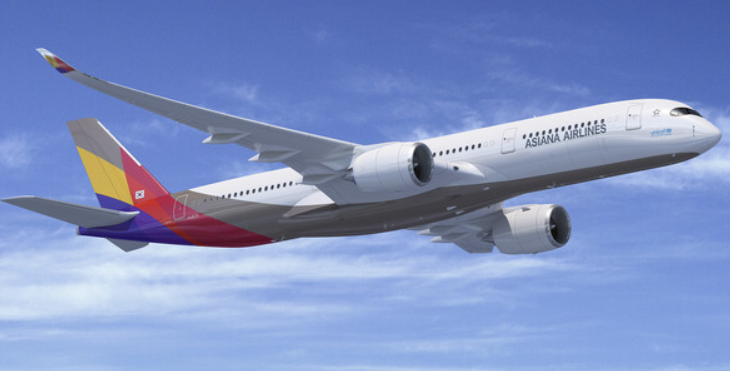
Asiana sold its cargo division to meet merger conditions, causing cargo revenue to plunge by KRW 761.1 billion to KRW 958.4 billion YoY.
Reduced cargo income has been cited as the direct cause of deteriorating earnings.
Last November, Asiana issued KRW 300 billion in perpetual bonds, fully purchased by Korean Air, seen as a move to secure financial stability during the integration process.
However, relying on external support for liquidity is not viewed as a fundamental solution to profitability.
Against this backdrop, Asiana’s strategy is to expand long‑haul European routes to improve its revenue mix with higher‑yield services.
- From March 31: Incheon–Milan, 3x weekly
- From April 3: Incheon–Budapest, 3x weekly (up from an original plan of 2x weekly, reflecting stronger demand)
The airline is also expanding China routes.
From March 29, China flights will increase by 28 weekly flights to 161 weekly, compared to the winter schedule:
- Incheon–Beijing: 17 → 20 weekly
- Incheon–Dalian: increased to 10 weekly
- Incheon–Tianjin & Incheon–Nanjing: each raised to 7 weekly
Key factors will be load factors and yields.
Long‑haul routes carry high fixed costs but can greatly improve profitability if demand is stable.
China routes are expected to see gradual recovery driven by better bilateral relations and the resumption of group tourism.
An official commented:
“A passenger‑focused strategy after the cargo sale was an inevitable choice.
Expanding long‑haul and China routes may support short‑term performance, but sustained demand will determine success given high debt and cost structures.”
4) U.S. Supreme Court Limits Trump Tariff Powers – Reshaping 2026 Trade Outlook

Key Ruling
- In a 6–3 decision, the Supreme Court ruled IEEPA‑based emergency tariffs unconstitutional, limiting presidential authority to impose tariffs under national emergency.
- “Reciprocal tariffs” and country‑specific duties imposed under the 1977 IEEPA are invalidated.
- Tariffs under other trade laws (e.g., steel & aluminum) remain in place.
- Invalidated tariffs include up to 34% reciprocal tariffs on Chinese goods and 25% duties on China, Canada, and Mexico.
SMEs Push for Refunds
- Over 800 SME coalitions such as We Pay the Tariffs are demanding fast, automatic refunds.
- Tariff costs have led to hiring freezes, reduced investment, and increased borrowing.
- Major retailers including Costco have joined lawsuits, raising expectations for refunds.
Retail & Transport Outlook
- Short‑term relief from tariff pressure is expected, but policy uncertainty will persist.
U.S. retail sales in 2026 are forecast to rise 3.5% to $7.78 trillion.
- Benefits will likely focus on import‑heavy consumer goods: computers, electronics, apparel, footwear, furniture.
- Trans-Pacific lanes and domestic trucking for consumer goods may see gradual volume growth, but as a limited recovery, not a structural demand shift.
Share this article :


top