

The Power of Logistics to Move the World!
It's the Power of extrans.
What Are SI, Port and Customs Cut-Offs? A Guide to Ocean Export Deadlines
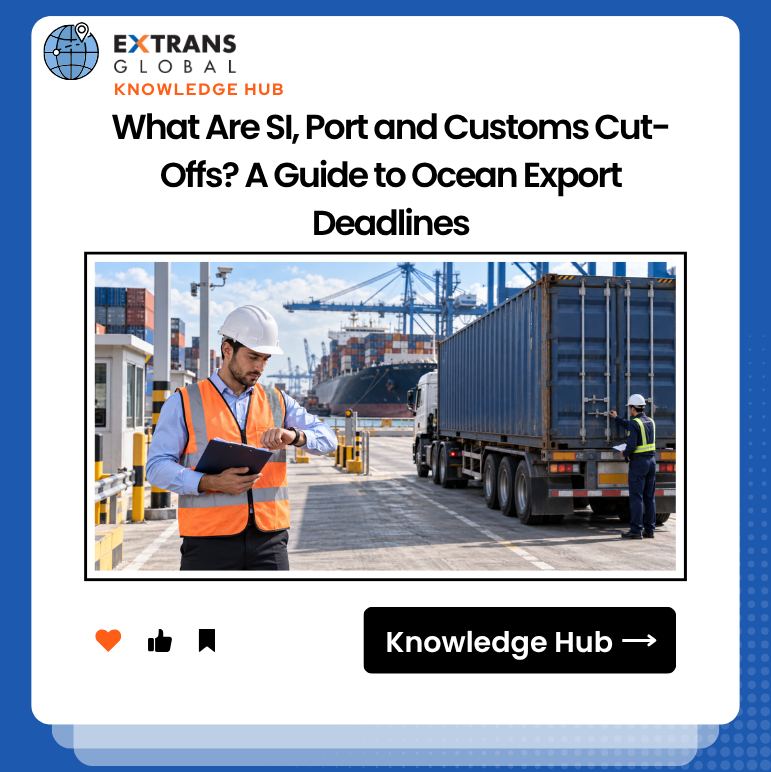
When arranging an ocean export shipment, the booking confirmation usually lists several cut-off times. SI, port and customs cut-offs apply to different stages of the shipping process. Missing any of them may prevent your cargo from loading as scheduled.
What Is the SI Cut-Off?
The Shipping Instruction Cut-off is the deadline for submitting bill of lading details.
Before the deadline, the shipper should confirm information such as the shipper, consignee, cargo description, package quantity, weight and destination. Late or incorrect information may delay bill preparation or result in amendment fees.
What Is the Port Cut-Off?
The Port Cut-off, also called the CY Cut-off or Gate-in Cut-off, is the latest time a loaded container can enter the designated terminal.
Stuffing, trucking and gate-in procedures must be completed before this deadline. Traffic congestion, appointment delays or missing documents may cause the container to miss its planned vessel.
What Is the Customs Cut-Off?
The Customs Cut-off is generally the deadline for completing export customs clearance and obtaining release.
Even if the container has entered the terminal, it may not be loaded without timely customs clearance. Cargo requiring permits, special supervision or inspection should be prepared earlier.
Do Not Forget the VGM Cut-Off
Full-container shipments normally require a Verified Gross Mass (VGM). If the VGM is not submitted by the deadline, the container may be excluded from the loading plan.
Cut-off times vary by carrier, port and service. Always follow the booking confirmation and the latest carrier notice. Carriers commonly list SI, VGM and gate-in deadlines separately.
How to Avoid Missing a Cut-Off
- Record every deadline after receiving the booking confirmation
- Prepare shipping instructions, customs documents and VGM data early
- Allow extra time for stuffing, trucking, gate-in and inspection
- Reconfirm cut-offs whenever the vessel schedule changes
- Check additional requirements for dangerous, reefer or special cargo
How EXTRANS GLOBAL Can Help
EXTRANS GLOBAL provides ocean freight, air freight, cross-border transportation, warehousing and cargo-handling services.
Our team can help review booking information, arrange terminal delivery, coordinate customs clearance and monitor key shipment deadlines.
Conclusion
The SI cut-off concerns shipping documents, the port cut-off concerns terminal entry, and the customs cut-off concerns customs release. Managing these deadlines early helps reduce the risk of rolled cargo, delays and additional costs.
Planning an ocean export shipment? Contact EXTRANS GLOBAL for a solution suited to your cargo and schedule.
Share this article :


top