

The Power of Logistics to Move the World!
It's the Power of extrans.
Why Is a Container Seal Number Important? A Guide to Sealing, Verification and Irregularities
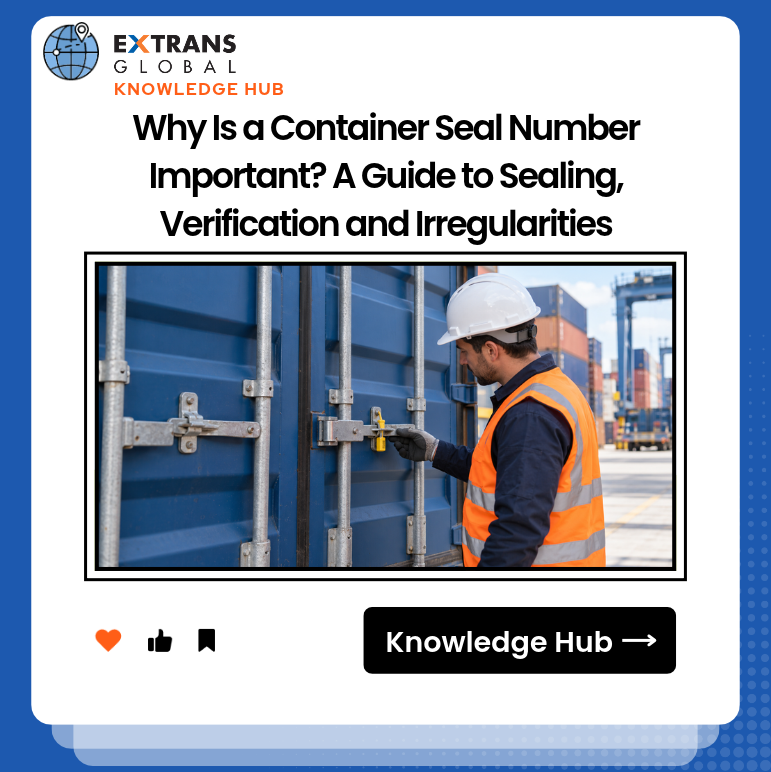
After an FCL shipment has been loaded, a single-use seal is usually attached to the container door locking mechanism. Although small, this seal plays an important role in cargo security, shipping documentation and delivery at the destination.
An incorrect seal number or damaged seal may lead to inspections, document amendments and cargo-release delays.
What Is a Container Seal?
A container seal is a single-use security device attached to the locking bar of a container door. Each seal has a unique series of letters or numbers and normally requires a tool to remove.
The seal does not replace the container’s locking mechanism. Its purpose is to show whether the container may have been opened or handled after sealing.
International shipments commonly use high-security seals, such as bolt seals, that meet applicable requirements.
Why Is the Seal Number Important?
1. Detecting Possible Tampering
A missing, damaged or changed seal may indicate that the container was opened during transportation. Early detection allows the parties involved to check for cargo shortages, damage or contamination.
2. Keeping Shipping Documents Consistent
The seal number is commonly recorded in stuffing records, shipping instructions and the bill of lading. The number shown in the documents should match the seal physically attached to the container.
An incorrect number may require document amendments and affect checks by the terminal, customs or consignee.
3. Confirming the Cargo Handover Status
The seal number and condition can be checked during stuffing, truck collection, terminal gate-in and destination delivery.
These records help identify the stage at which an irregularity may have occurred.
What Should Be Done After Sealing?
After the container has been loaded, follow these steps:
- Check the doors, locking bars and seal position
- Attach a seal that meets the shipment requirements
- Verify the container and seal numbers
- Take clear photos of the doors and seal
- Submit the correct seal number to the logistics provider
- Confirm that all shipping documents contain the same information
The consignee should also check the seal condition and number before opening the container.
What Should You Do If the Seal Is Irregular?
If the seal is missing, damaged or does not match the documents, do not immediately open the container or replace the seal.
Stop the operation, take photographs and notify the logistics provider, carrier or terminal. If customs has inspected and resealed the container, keep the inspection record and the new seal number.
After resealing, update the shipping documents and record the old number, new number and reason for replacement.
Common Mistakes
- Forgetting to record the seal number after stuffing
- Confusing the container number with the seal number
- Taking photographs that do not clearly show the number
- Failing to update documents after replacing a seal
- Opening the container without checking the seal
- Failing to keep written records of an irregularity
How EXTRANS GLOBAL Can Help
EXTRANS GLOBAL provides ocean freight, air freight, cross-border transportation, warehousing and cargo-handling services.
Our team can help customers verify container and seal information, coordinate document amendments, and communicate with carriers and operational partners when seal irregularities occur.
Conclusion
A container seal cannot prevent every transportation risk, but it is an important tool for identifying possible tampering and confirming the cargo handover status.
Checking the seal at every stage, taking clear photographs and reporting irregularities promptly can reduce document errors, delivery delays and cargo disputes.
Planning an FCL ocean shipment? Contact EXTRANS GLOBAL for a transportation and cargo-handling solution suited to your requirements.
Share this article :


top