

The Power of Logistics to Move the World!
It's the Power of extrans.
Why Inspect a Container Before Stuffing? Prevent Leaks, Cargo Damage and Replacement Delays
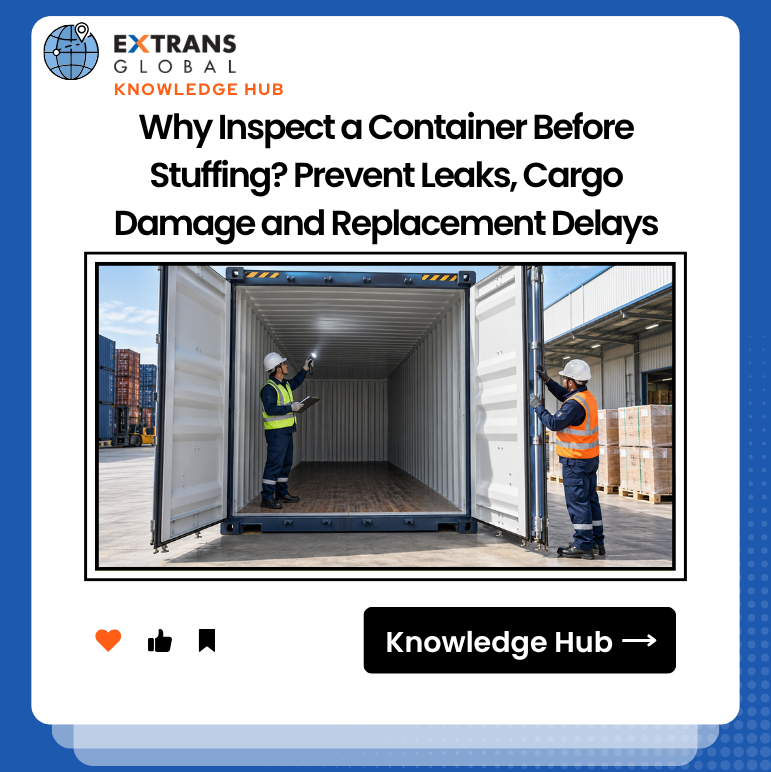
Before stuffing export cargo, shippers should check not only the packaging and quantity but also whether the container is suitable for loading.
A damaged, leaking, contaminated or poorly sealed container may expose cargo to moisture, pollution or physical damage. If a problem is discovered after stuffing, the cargo may need to be unloaded and transferred to another container, affecting trucking, customs clearance and terminal gate-in schedules.
1. Inspect the Exterior
Check the roof, side panels, bottom rails and corner posts for visible deformation, cracks or holes.
Minor scratches and surface rust may not affect use. However, structural damage, significant punctures or doors that cannot close correctly should be reported to the depot or logistics provider immediately.
2. Confirm the Interior Is Clean and Dry
The container interior should be dry, clean and free from strong odours.
Standing water, oil stains, chemical residue, debris or protruding nails may contaminate or damage the cargo. Food, textiles, furniture and other odour-sensitive products require particular attention.
3. Check for Light and Water Leaks
Inspect the roof, side walls and joints for unusual light penetration, water marks or previous repair areas.
Even a small opening may allow rainwater, seawater or humid air to enter during transportation. Cartons, electronics and moisture-sensitive cargo may also require desiccants or additional moisture protection.
4. Check the Doors and Gaskets
Make sure both doors open and close correctly. Inspect the locking rods, handles, retainers and rubber gaskets for looseness, damage or deformation.
Doors that do not close securely may increase the risk of water entry and create problems during sealing or terminal inspection.
5. Verify the Container Number and Safety Plate
Confirm that the container number matches the release order, booking information and shipping documents.
The CSC Safety Approval Plate and relevant inspection information should also be checked. Containers used in international transport must meet applicable safety inspection and maintenance requirements.
6. Check Special Containers Carefully
For reefer containers, confirm that the equipment has been inspected and verify the temperature, ventilation and humidity settings.
For open-top, flat-rack and other special containers, check the securing points, tarpaulin, structural condition and cargo dimensions before loading.
What Should You Do If a Problem Is Found?
- Photograph the interior, exterior, doors and container number before stuffing
- Stop loading if there is damage, contamination or a leakage risk
- Notify the depot, carrier or logistics provider immediately
- Do not repair or continue using the container without confirmation
- After replacement, update the container number, seal number and shipping documents
How EXTRANS GLOBAL Can Help
EXTRANS GLOBAL provides ocean freight, air freight, cross-border transportation, warehousing and professional cargo-handling services.
Our team can help review container condition, arrange replacement equipment, coordinate stuffing and trucking, and recommend suitable packaging, moisture protection and cargo-securing measures.
Conclusion
A pre-stuffing container inspection takes little time but can identify structural damage, contamination and sealing problems before the cargo is loaded.
Completing the inspection and keeping photographic records before sealing can reduce cargo damage, replacement delays and liability disputes.
Preparing an export container shipment? Contact EXTRANS GLOBAL for equipment and handling arrangements suited to your cargo.
Share this article :


top