

The Power of Logistics to Move the World!
It's the Power of extrans.
EXTRANS GLOBAL - Air Freight News - Week 15 2025
Air Cargo General
1) T'way Air to launch Incheon to Tashkent, Uzbekistan service in May (4 times a week)

- T'way Air plans to launch a new route between Incheon and Tashkent, Uzbekistan, on May 23.
- The route will operate four times a week (Monday, Wednesday, Friday, and Sunday), departing from Incheon International Airport at 6 PM (local time) and arriving at Tashkent International Airport at 9:30 PM.
- The return flight will depart at 11 PM and arrive in Incheon the next day at 9:25 AM. The flight duration is approximately 7 hours and 30 minutes.
- T'way Air will hold a special fare promotion for tickets throughout April to celebrate the launch of the Tashkent route.
- A T'way Air representative stated, "Tashkent is known as one of the safest cities in Central Asia, making it a great place to travel. It allows visa-free stays of up to 30 days and has well-developed infrastructure, including subways and large shopping malls." They expressed hope that this launch will contribute to increased exchanges between Korea and Central Asia.
2) Northeast Asia to Europe air cargo demand surges - Forwarders prefer spot contracts over long-term freight contracts
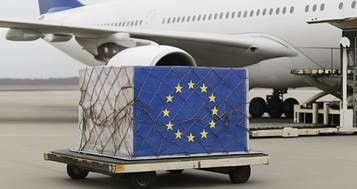
- Demand for air cargo from Northeast Asia to Europe is rising sharply, exceeding the global average. This trend, observed up until recently, is attributed not just to an increase in demand but also to the specific characteristics of the route. It is noted that shippers need to understand forwarders' space management strategies for their future pricing strategies.
- The Northeast Asia-Europe route, which includes mainland China, Hong Kong, Taiwan, Macau, Japan, and South Korea, is one of the key routes in the global air cargo market. In the first three weeks of March, demand based on chargeable weight for this route recorded a double-digit increase compared to the previous year, while the global average increase during the same period was 4%.
- This strength is driven by the continued expansion of e-commerce volumes, with both the number of shipments and chargeable weight per shipment being higher than a year ago.
- The Civil Aviation Administration of China (CAAC) also announced that international air cargo and mail volumes from China increased by double digits in January and February compared to last year, although the growth rate was somewhat moderate.
- Notably, airline spot rates have risen by 11% over the past year. Despite a temporary decline in early March, the current spot rate for the Northeast Asia-Europe route proposed by airlines has risen to $4.28 per kilogram, an 11% increase compared to the same period last year.
- Another point of interest is the relationship between spot rates (valid for one month) and seasonal rates (valid for more than one month). Typically, when market pressure is high, spot rates are higher than seasonal rates. However, on the Northeast Asia-Europe route, the two rates are currently similar, indicating that the market may show a stable trend rather than a short-term surge.
- Additionally, about 45% of air cargo to Europe is currently purchased in the spot market, which is an increase from the previous year. This indicates that forwarders are leaning more towards short-term contracts rather than long-term ones, reflecting a cautious approach amid market uncertainties. If there were long-term confidence in rising rates, forwarders would likely increase their share of seasonal contracts to secure lower rates from airlines and sell them to shippers at a premium.
3) U.S. Reinstates Duty on Small Packages from China - A Direct Hit to Temu and Shein

- The U.S. has eliminated the duty-free exemption for small packages from China. As a result, Chinese cross-border e-commerce companies like Temu and Shein are expected to take a direct hit.
- According to Reuters, President Trump signed an executive order on the 2nd to abolish the "De Minimis" exemption for tariffs on imports valued under $800 (approximately 1.2 million won).
- This executive order is set to take effect at 12:01 AM Eastern Time on May 2.
- Consequently, a tariff of 25% per item or 30% of the product value will be imposed on all goods valued under $800 coming from China and Hong Kong. After June 1, this tariff rate is expected to increase to $50 per item.
- Previously, President Trump signed an initial executive order in February to eliminate tariff exemptions on inexpensive Chinese products, but later paused related measures due to logistical complications that made inspections of millions of low-cost shipments more complex.
- One source explained, "The number of shipments entering the U.S. through the duty-free route has exploded in recent years, reaching nearly 1.4 billion last year."
- As a result, companies like Temu and Shein are expected to be impacted. Products sold on platforms like Temu are shipped directly from sellers to individual buyers, and most of these items are inexpensive, benefiting from the "duty-free" exemption.
- Additionally, Reuters reported that drug traffickers have also utilized this system to distribute chemical precursors into the U.S.
4) Airline Industry Preparing for the AI Era - Serious About IT Investment
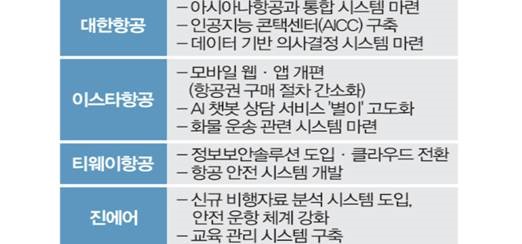
- The airline industry is ramping up investment in information technology (IT). Domestic airlines are improving systems to enhance convenience, such as revamping their websites and apps and strengthening AI chatbots, as well as establishing systems for more efficient business operations.
- According to the airline industry on the 1st, Korean Air has budgeted about 20% more for IT this year compared to last year. Ahead of its planned merger with Asiana Airlines in December 2026, Korean Air plans to improve the integration and utilization of data across passenger, cargo, operations, and maintenance sectors.
- An 'AI Contact Center (AICC)' is also being established. The AICC is a cloud-based intelligent customer service center that uses AI technology, including voice bots and chatbots, to answer consumer inquiries. A data-driven decision-making system will also be set up to maximize operational efficiency using generative AI technology.
- T'way Air's investment budget has increased by about 20%. The focus is on improving infrastructure through the introduction of information security solutions and cloud transitions, as well as developing aviation safety-related systems. Jin Air is implementing a flight data analysis program that analyzes and processes data generated during flights and shares it with relevant departments.
- The increase in IT investment is influenced by the rising passenger demand following the end of the pandemic. With an increase in air travelers resulting in higher performance than in previous years, airlines have been able to actively pursue IT investments. Their strategy is to secure competitiveness and attract more customers through enhanced services. According to the Ministry of Land, Infrastructure and Transport, the total number of air passengers using domestic airports last year was 120,058,371, a 19.5% increase compared to 100 million in 2023. Passenger demand is expected to rise this year as well.
- According to SITA's '2024 Air Transport IT Insights Report,' global airline IT investments were estimated at around $37 billion (54.46 trillion won) last year, an increase from $35 billion in 2023. This year, 72% of IT executives from 379 major airlines responded that they expect IT investments to increase.
Share this article :


top